Δευ: 18:30 – 21:30 - Τετ:18:30 – 21:30 - Παρ:18:30 – 21:30
Δερβενακίων 30 & Υγείας, Παλλήνη
Bleedless treatment of discopathy, with intradiscal gel that is placed by injection.

The intervertebral disc that constitutes The main stabilizing and supporting element between the vertebrae is made up of the annulus fibrosus and the nucleus pulposus.
The annulus fibrosus surrounds (encircles) the nucleus pulposus, which acts as a shock absorber for the vertebra. When this structure and the relationship
 between them are damaged, the nucleus pulposus loses its mechanical properties, changes shape in some way and often creates herniated discs.
All this condition is responsible for pain in the back, neck or in an arm or leg.
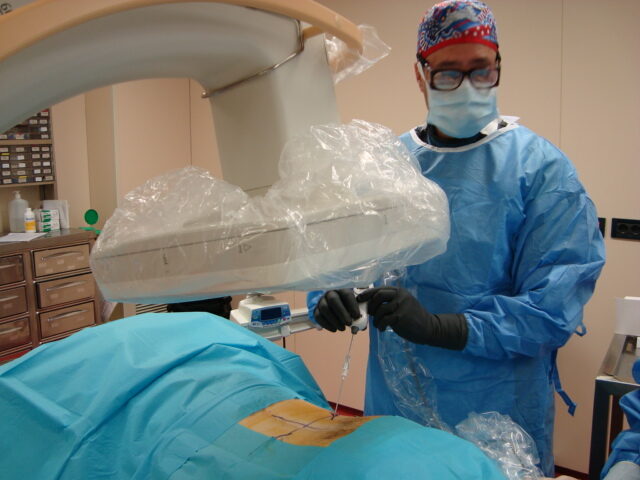
The intradiscal gel is placed under fluoroscopic guidance and local anesthesia with a thin needle inside the intervertebral disc, in the area where the damaged nucleus pulposus is located.
The material, acting osmotically (with osmotic pressure), re-concentrates the nucleus pulposus into a single form and all its detached parts that have created hernias, are reorganized and return it, as far as possible, to its original form.
Thus we have a new nucleus pulposus that is clearly much better than the damaged one, that is, with better mechanical properties.
The nucleus pulposus is regenerated, resulting in the pressure exerted on the nerve stopping, since the part that is pressing on it has returned to its original position.
“THE LATEST DEVELOPMENT IS THE USE OF A SPECIALIZED ELECTRODE, WITH THE HELP OF WHICH, BY USING PLASMA, DIRECT REDUCTION OF THE PAINFUL DISC IS MADE WITH SIMULTANEOUS NECROSIS OF THE PAIN RECEPTORS, WHERE THE BENEFICIAL EFFECT APPEARS IMMEDIATELY”.
Therefore, the pain in the extremity (sciatica, meralgia, etc.) stops.
With the reorganization of the nucleus pulposus, the localized pain due to discopathy, i.e. back pain, also stops.
The procedure lasts, on average, 20 minutes, and the results appear from the first half hour and are completed in 3-5 weeks.
The patient immediately returns to his home and his daily activities.
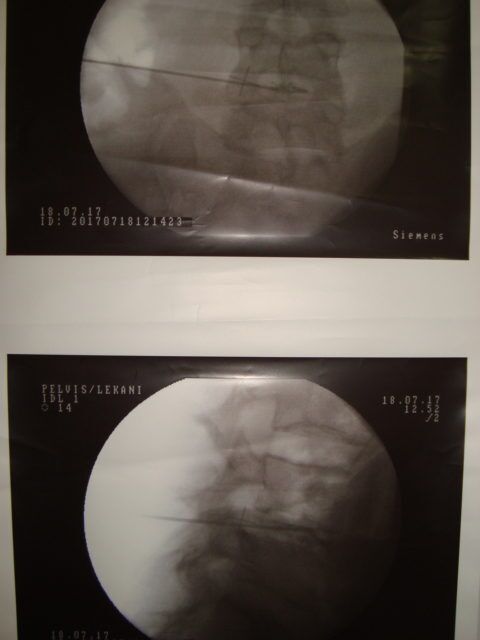
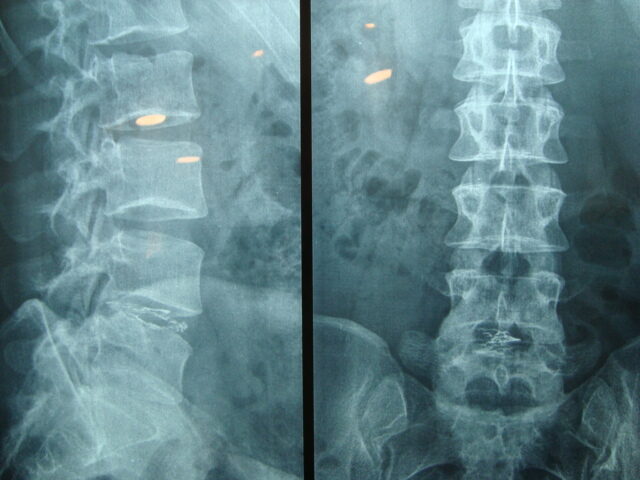
During – AFTER
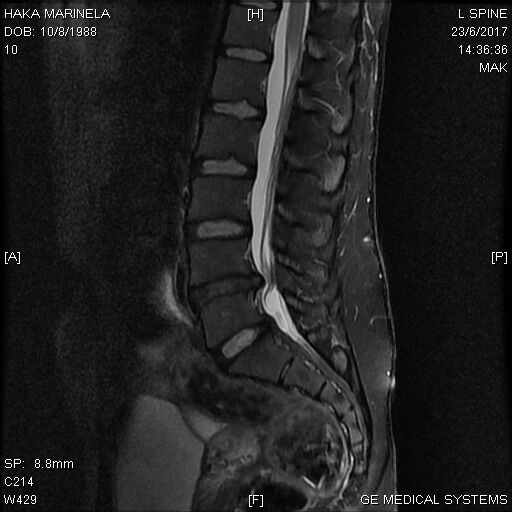
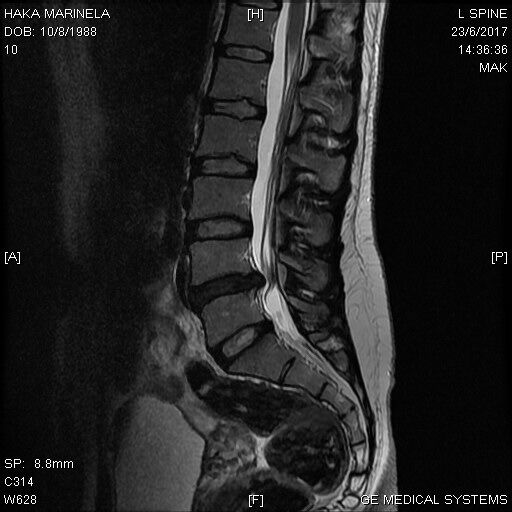
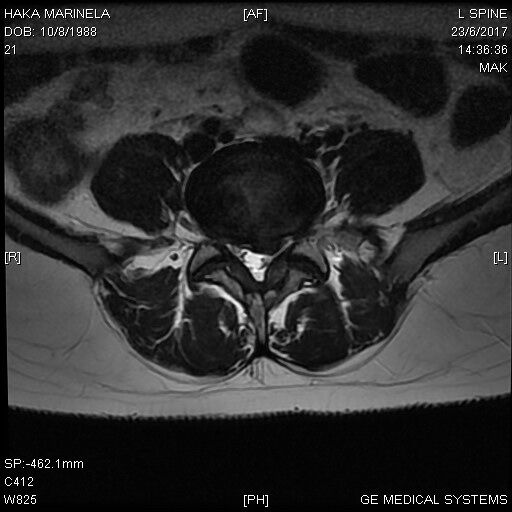
MRI
[instagram-feed feed=1]