Δευ: 18:30 – 21:30 - Τετ:18:30 – 21:30 - Παρ:18:30 – 21:30
Δερβενακίων 30 & Υγείας, Παλλήνη
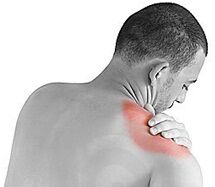 Tendonous petal is the tendon that surrounds the head of the humerus and is essentially responsible for the movement of the shoulder.
A group of 3 Shoulder Muscles, the Supraspinatus, the Subspinatus, and the Teres Minor, which perform the movement of external rotation and abduction, have a common tendon attachment to the Greater Brachial Tract, which is referred to in the international bibliography as the Rotator Cuff, Greek Tendonius Petalo. This complex of Tendons often suffers injuries or degenerative changes and often tears (ruptures).
Symptoms
Common symptoms include:
Imaging Tests
For diagnosis, in addition to the clinical examination, we usually perform the following tests:
Treatment
The goal of treatment is to reduce pain and improve functionality. In general, treatment can be conservative or surgical.
Conservative treatment
In approximately 50% of patients, conservative treatment relieves the patient from pain and improves functionality to satisfactory levels. However, in complete tears, muscle strength is usually not restored.
Conservative treatment includes:
The advantage of conservative treatment is the avoidance of the risks of surgery, such as inflammation, stiffness, and a prolonged recovery period.
The disadvantages of conservative treatment are the risk of damage spreading over time, the limitation of the patient’s activities for a long period of time and the permanent loss of muscle strength.
Surgical treatment
The procedures for repairing rotator cuff tears are divided into open sutures and arthroscopic sutures. The long-term results are similar, however, with the arthroscopic technique, recovery and return to full activities are faster, postoperative pain is less and the aesthetic result (smaller incisions) is clearly superior to open methods.
[instagram-feed feed=1]